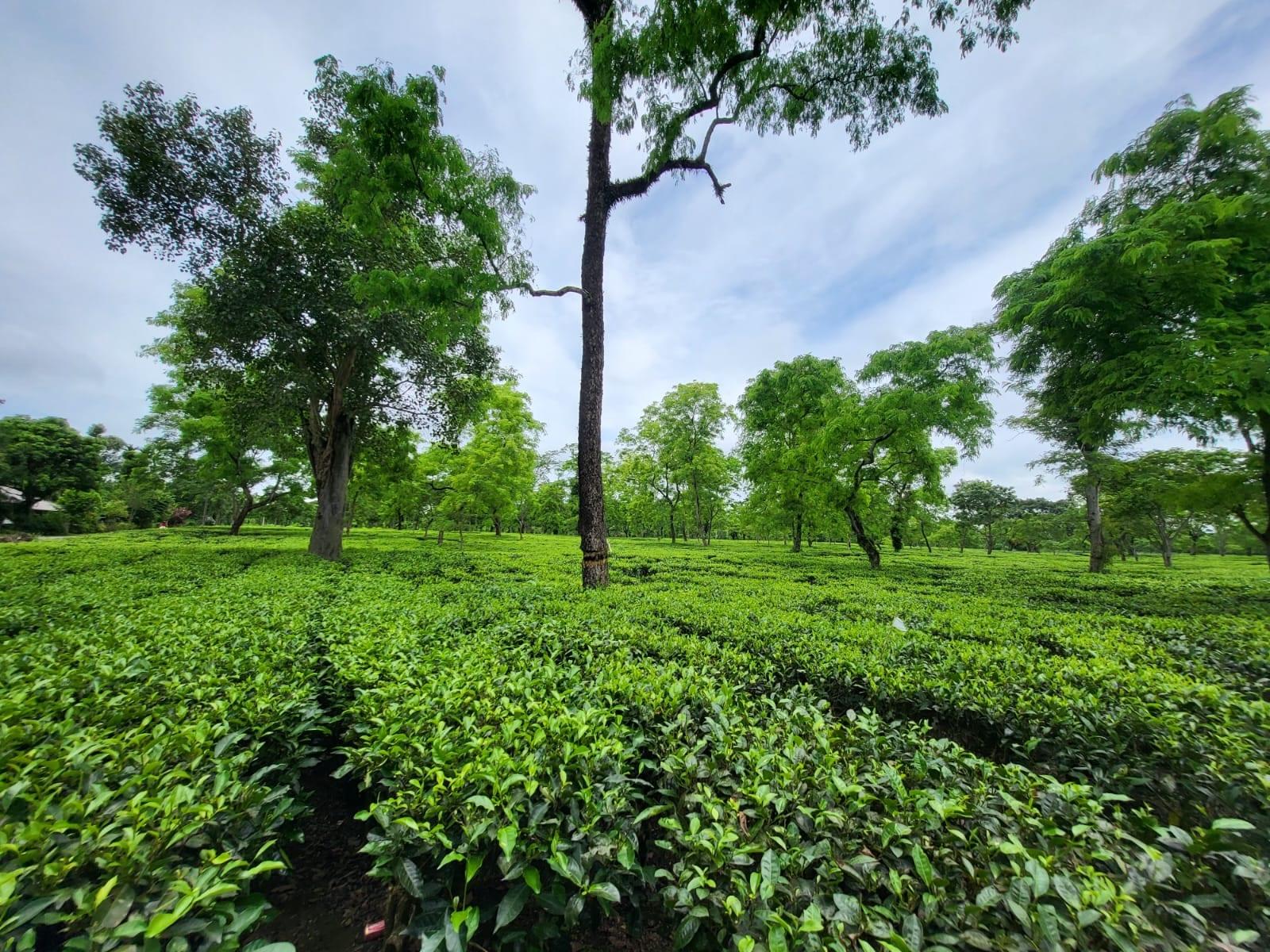
How tea came to Upper Assam
· Dhansiri Tea · 0 comments
The story of Assam tea is usually told as a discovery. It was not one.
1823, and earlier
When the Scottish trader Robert Bruce reached Upper Assam in 1823, the Singpho people were already growing a native tea plant, processing the leaf and drinking it. Bruce was taken to the Singpho chief Bessa Gam by the Assamese nobleman Maniram Dewan, and was given plant material.
What happened next was not discovery but commercialisation — and it is worth saying plainly, because the people who knew the plant first are usually written out of the paragraph.
1824 to 1838
Robert Bruce died in 1824. His brother Charles Alexander Bruce carried on, establishing nurseries and sending manufactured samples to the Tea Committee in Calcutta, which had been set up to find a source of tea outside China.
The plant turned out not to be the Chinese Camellia sinensis var. sinensis at all, but a larger-leafed variety native to the region — now classified as var. assamica, and the reason Assam tea tastes the way it does.
10 January 1839
The first chests of Assam tea were auctioned in London. The Assam Company was formed the same year, and commercial planting began in earnest.
What followed over the next half-century was the clearing and planting of enormous areas of Upper Assam, and the movement of very large numbers of labourers into the region — a history whose consequences are still part of the social fabric of every tea district in the state.
1877
Bokakhat Tea Estate was established, four decades into that expansion, on the plain between the Brahmaputra and the hills.
Nearly a century and a half later the same sections are still planted, still plucked and still manufactured a short distance from where the leaf is picked. Assam has since become the largest tea-growing region in the world.
You may also like
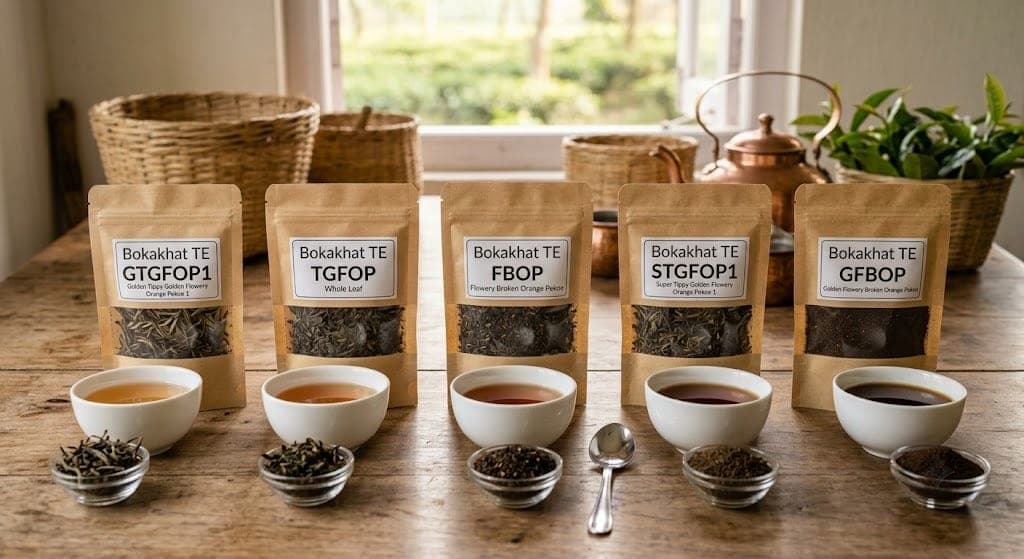
What the letters on a chest of orthodox tea actually mean
STGFOP1 is not a serial number. Every letter describes something about the leaf in the chest — and none of them describes how good the tea is.
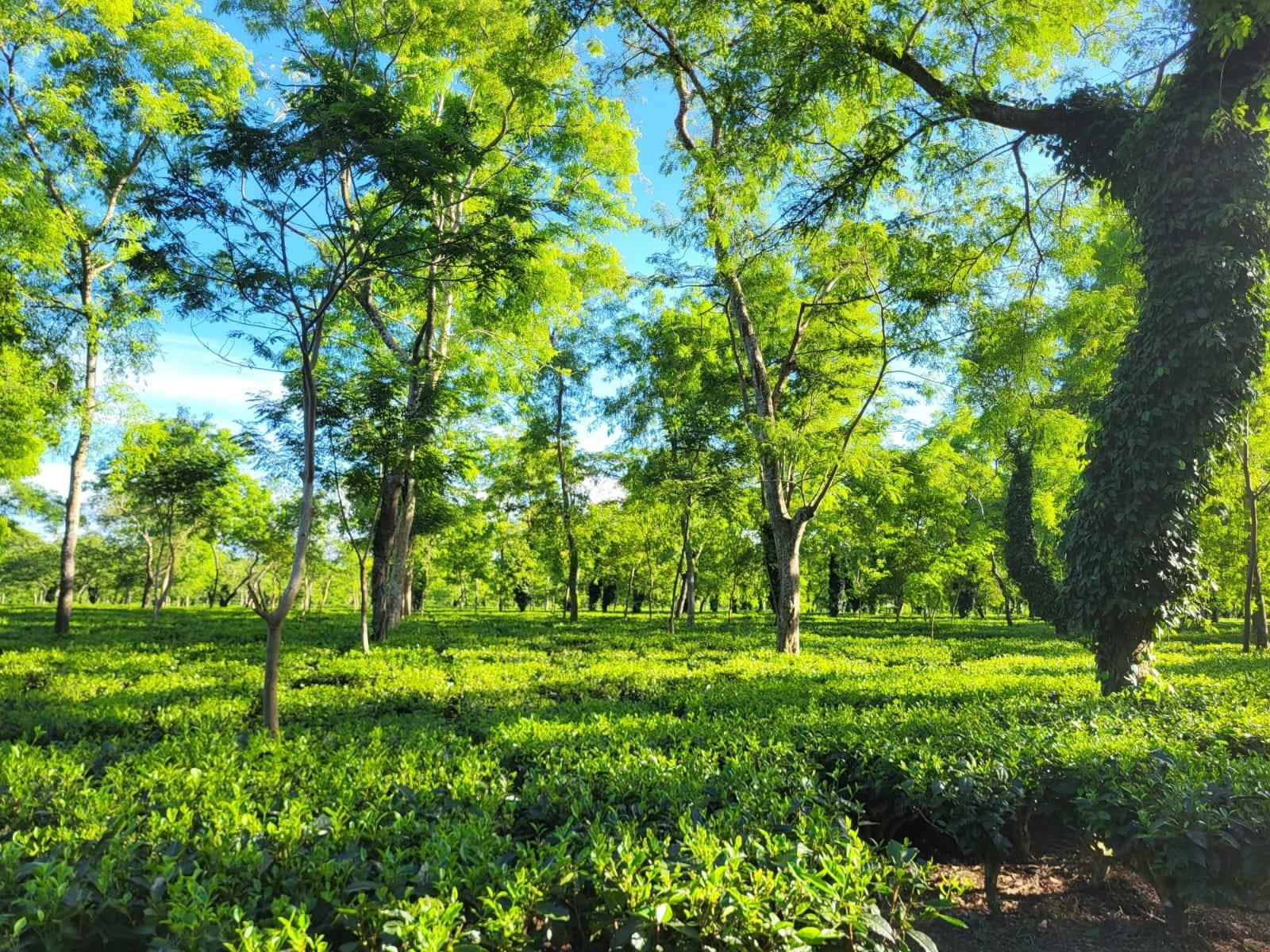
Why an Assam tea garden looks like woodland
Visitors expect neat open rows and find something closer to a forest. The trees are not decoration — they are the single biggest agronomic decision an Assam garden makes.
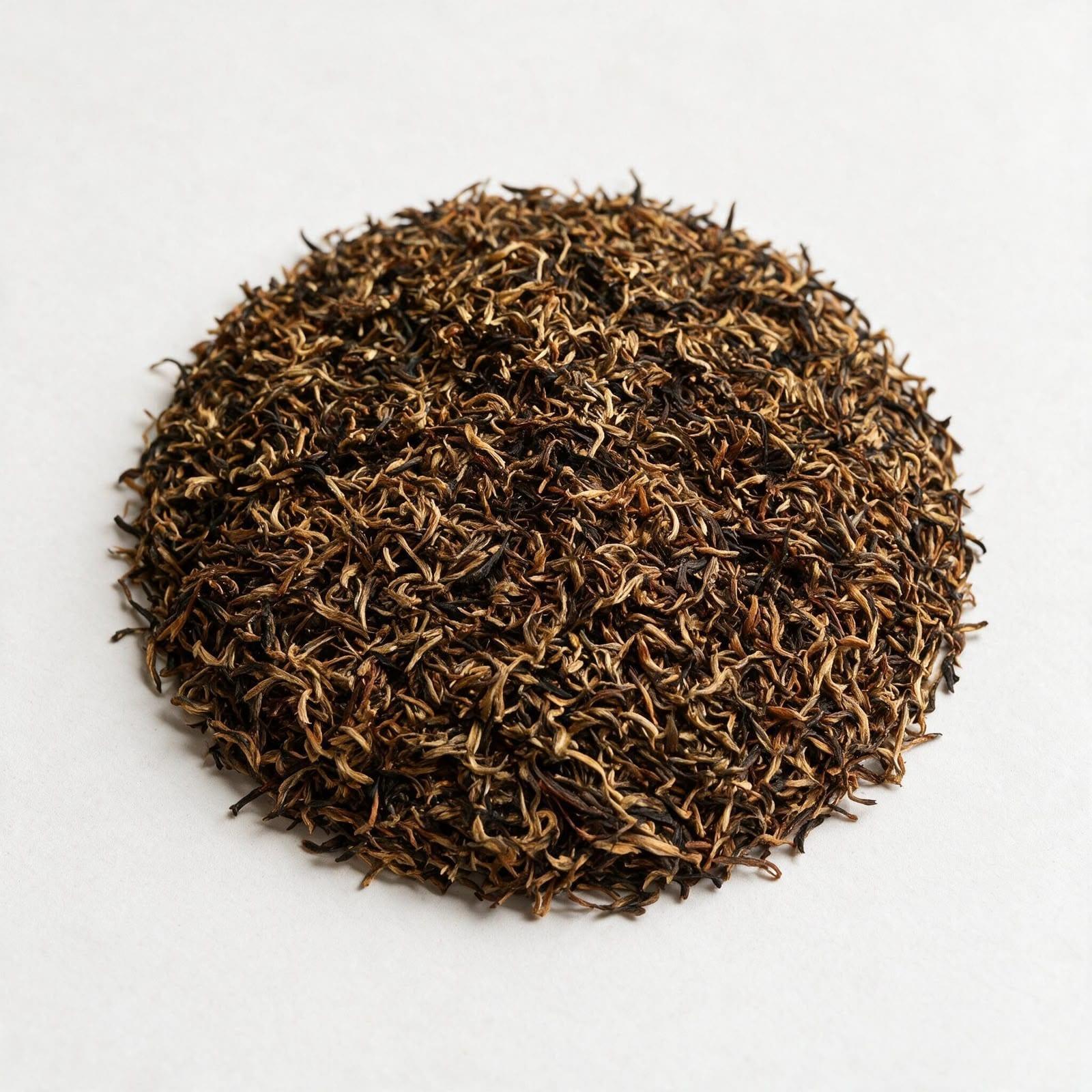
Orthodox or CTC: the same leaf, two different teas
They come off the same bushes, picked to the same standard, on the same morning. Everything that separates them happens in the factory.