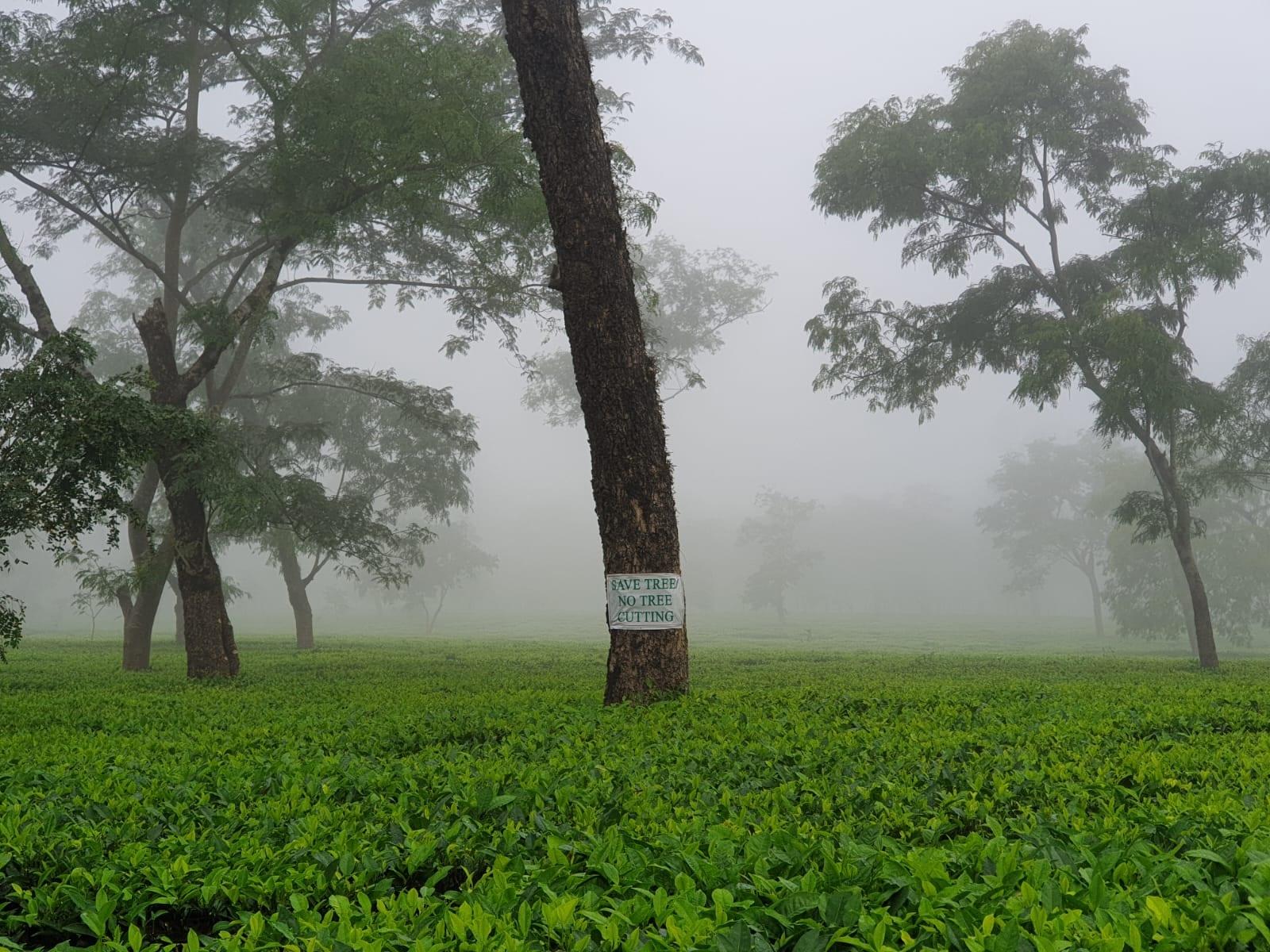
Kaziranga, our neighbour
· Dhansiri Tea · 0 comments
Bokakhat sits in Golaghat district, in close proximity to Kaziranga National Park. That is a line in our About page, and it is also a daily operating condition.
What is next door
Kaziranga was declared a UNESCO World Heritage Site in 1985. It holds the largest population of the greater one-horned rhinoceros left anywhere — around two-thirds of the world total — along with tigers, elephants, wild water buffalo and swamp deer, across grassland, wetland and forest on the Brahmaputra floodplain.
It is one of the genuine conservation successes of the last century, achieved in a densely populated agricultural landscape rather than an empty one.
What that asks of a garden
A tea estate near a park like that does not get to treat environmental practice as a marketing exercise. Three things follow directly:
- What leaves your land in the water gets somewhere. Spray practice in Indian tea is governed by the Plant Protection Code, which sets both what may be used and how long must pass before plucking. Next to a floodplain park, that is a floor rather than a target.
- The canopy is part of something larger. Several hundred hectares of continuous mature tree cover, in a landscape otherwise given over to open cultivation, is habitat and corridor whether or not anyone planned it that way.
- Animals do not read boundaries. Gardens in this landscape share it with what moves through it, and the practical answer is accommodation rather than exclusion.
Why the rhino is in our mark
Because it is accurate. The rhino stands beneath a tea shoot in the Bokakhat logo for the same reason the estate is called Bokakhat: it is where we are. The land gives us our tea, and it is not only ours.
You may also like
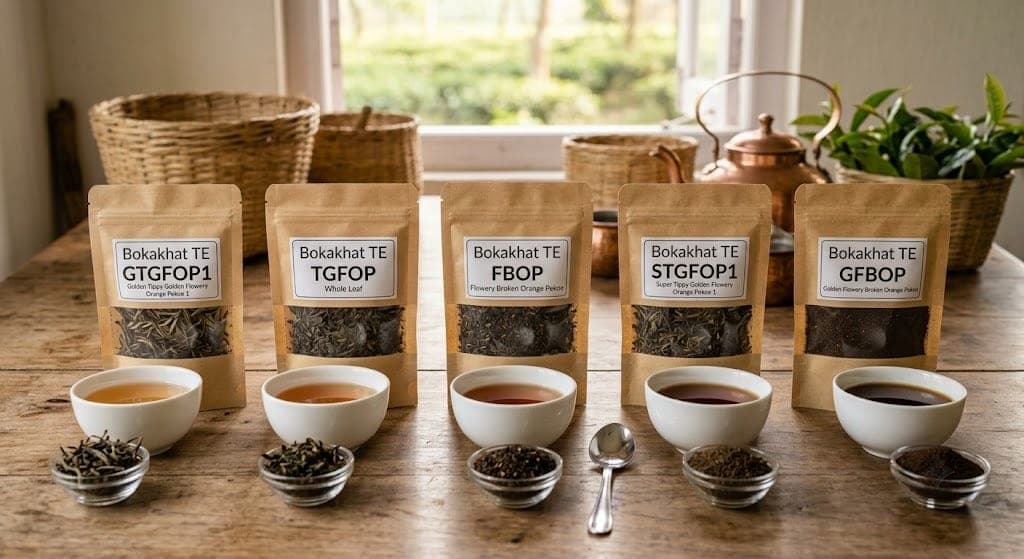
What the letters on a chest of orthodox tea actually mean
STGFOP1 is not a serial number. Every letter describes something about the leaf in the chest — and none of them describes how good the tea is.
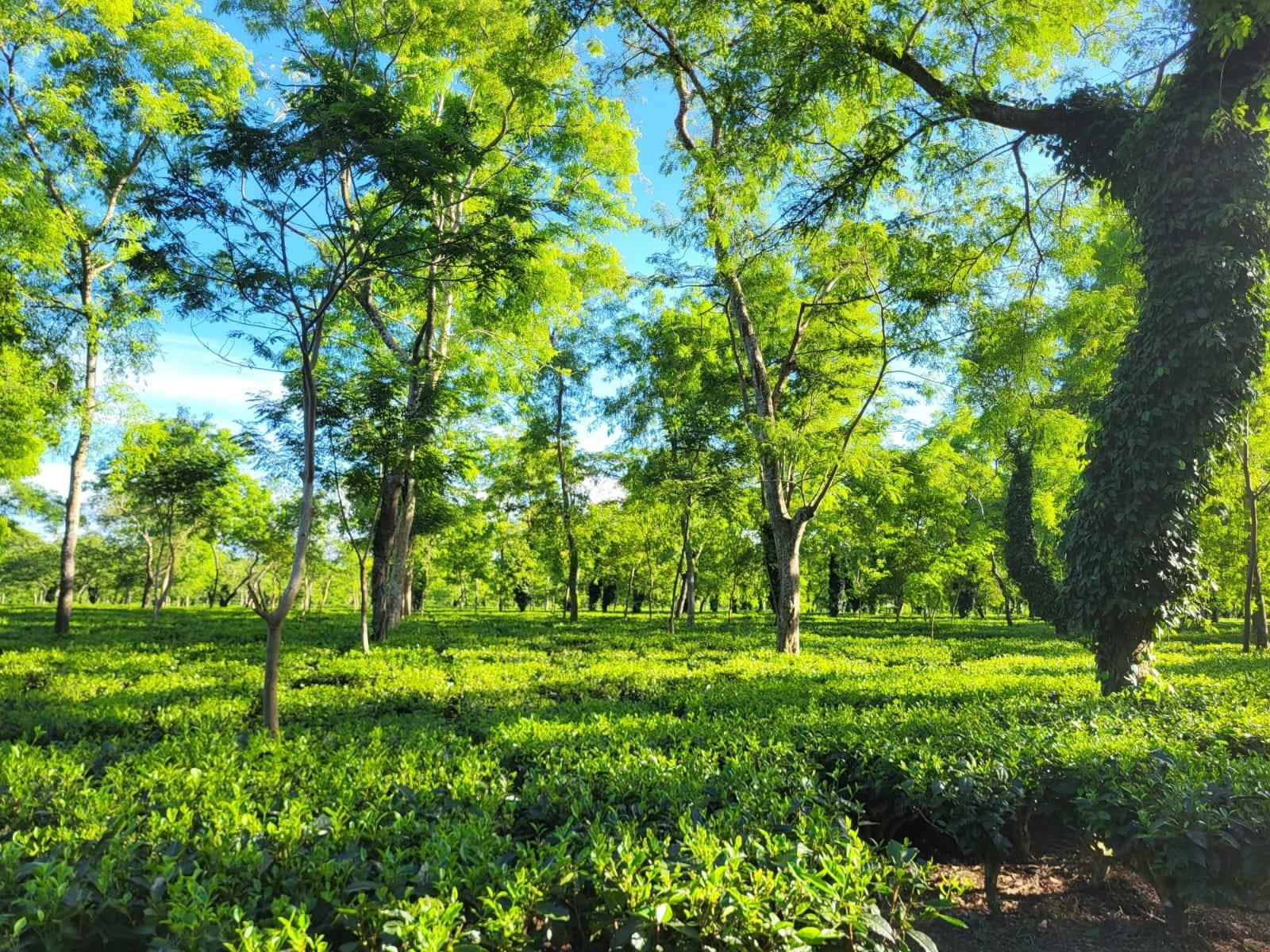
Why an Assam tea garden looks like woodland
Visitors expect neat open rows and find something closer to a forest. The trees are not decoration — they are the single biggest agronomic decision an Assam garden makes.
Orthodox or CTC: the same leaf, two different teas
They come off the same bushes, picked to the same standard, on the same morning. Everything that separates them happens in the factory.